





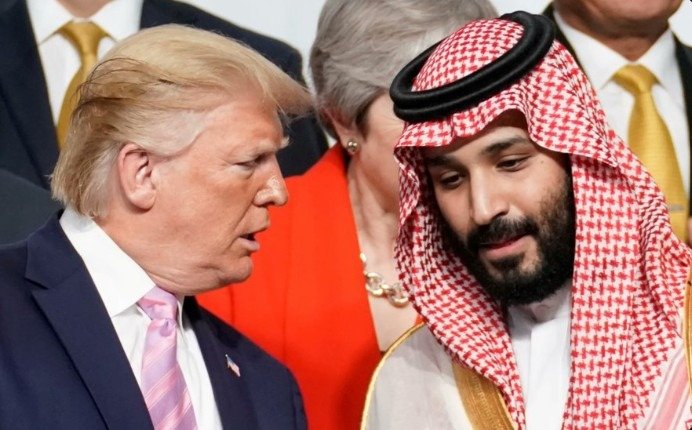
Washington, D.C., May 18, 2025 – President Donald J. Trump has returned from a whirlwind Middle East tour, securing over $2 trillion in trade and investment deals that have redefined U.S. relations with Saudi Arabia, Qatar, and the United Arab Emirates. Hailed by the White House as a triumph of “commercial diplomacy,” the trip showcased Trump’s dealmaking prowess, rooted in his Art of the Deal philosophy, and unveiled three overlooked commercial strategies that could transform the region’s economic and political landscape. A surprising move involving Pakistan further stunned diplomats, marking a bold shift in U.S. foreign policy.
The tour, Trump’s first major international trip of his second term, yielded historic agreements: a $600 billion strategic economic partnership with Saudi Arabia, a $1.2 trillion economic exchange with Qatar, and $200 billion in commercial deals with the UAE, accelerating a prior $1.4 trillion investment framework. These deals span AI, energy, defense, and aviation, including Qatar Airways’ $96 billion purchase of 210 Boeing jets and Saudi Arabia’s $142 billion defense package, dubbed the “largest in history” by the White House. Trump’s vision, as he stated in Riyadh, is a Middle East “defined by commerce, not chaos,” a stark departure from past U.S. interventionism.
Three commercial strategies emerged, largely missed by mainstream media. First, Trump leveraged personal relationships with Gulf leaders, cultivated during his real estate days, to secure rapid commitments. Second, he prioritized scalable, tech-driven investments—like UAE’s $1.4 trillion AI pledge—positioning the U.S. as a global innovation hub. Third, he bundled defense and economic deals, ensuring long-term U.S. influence while boosting American jobs. These tactics, rooted in Trump’s business acumen, outpaced traditional diplomacy, leaving analysts scrambling to assess their impact.
The Pakistan move, however, stole the spotlight. In a Doha speech, Trump hinted at a “new strategic alignment” involving Pakistan, proposing economic incentives to stabilize its role in regional security. Details remain vague, but sources suggest talks of a U.S.-Pakistan trade corridor, potentially involving Gulf investment, to counter China’s influence. Diplomats were left speechless, with one anonymous European envoy calling it “a geopolitical curveball.” The move aligns with Trump’s broader strategy to reorient U.S. alliances through economic leverage, bypassing conventional diplomatic channels.
Critics question the deals’ longevity, noting some predate Trump’s presidency and rely on volatile oil markets. Others raise concerns about conflicts of interest, given Trump’s family business ties in the region. Yet, supporters argue the agreements signal a pragmatic shift, prioritizing American economic interests over ideological battles. As Trump declared in Abu Dhabi, “We’re building a future where nations compete with dollars, not drones.”
The media’s focus on pageantry—camels in Qatar, gold-plated receptions—missed the deeper strategic shift. Trump’s deal spree has not only injected trillions into the U.S. economy but also redefined Middle East politics, with Pakistan’s inclusion signaling a new era of unpredictable diplomacy. As the dust settles, the world watches to see if Trump’s Art of the Deal will deliver lasting stability or spark unforeseen tensions.
Sources:







+ There are no comments
Add yours