







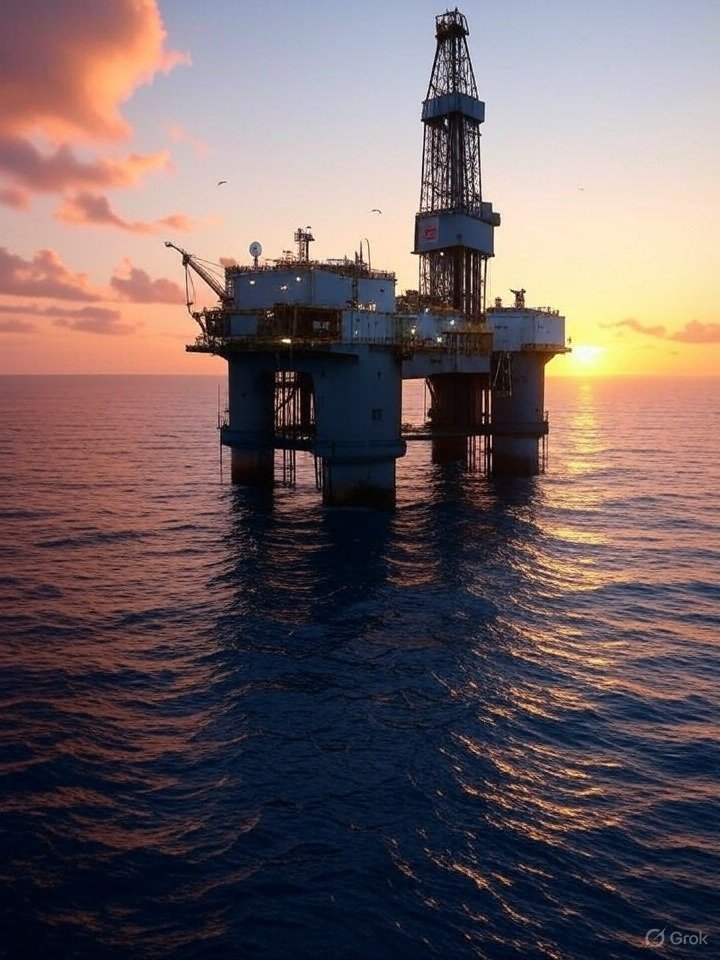
In early January 2025, President Joe Biden enacted a sweeping executive order under the Outer Continental Shelf Lands Act (OCSLA), permanently banning new offshore oil and gas leasing across 625 million acres of U.S. coastal waters, including the Atlantic Coast, Eastern Gulf of Mexico, Pacific Coast, and parts of Alaska’s Northern Bering Sea. Touted as a landmark environmental move, the ban has sparked concerns about its long-term effects on domestic oil production, drilling contractors, and the broader economy, with ripple effects that may persist despite President-elect Donald Trump’s pledges to reverse it.
The ban halts future leasing in areas with limited current activity but significant potential, particularly in the Eastern Gulf of Mexico, where oil companies have shown interest due to accessible resources. Industry experts argue this restriction stifles exploration and development, forcing drilling contractors to seek opportunities overseas. “Blanket bans only serve to transfer energy production and economic opportunities abroad,” said Ron Neal, chairman of the Independent Petroleum Association of America Offshore Committee, noting that countries like Russia could benefit at the expense of U.S. interests.

The economic impact is already evident. The oil and gas sector supports high-paying jobs, with offshore drilling roles averaging salaries above $100,000 annually. The Biden administration’s slow pace of leasing—described as the lowest in 50 years—has led to canceled or postponed lease sales in states like New Mexico and Wyoming, costing local economies millions in revenue. The Bureau of Land Management’s delay in approving permits, with over 5,000 still pending, exacerbates the issue, pushing contractors to markets in the Middle East and South America, where regulatory environments are less restrictive.

This shift threatens to erode domestic expertise and infrastructure. Offshore drilling, which accounts for 15% of U.S. oil production, primarily in the Central and Western Gulf of Mexico, relies on specialized contractors. As companies relocate, the U.S. risks losing skilled workers and technological leadership, potentially setting the stage for an economic downturn in energy-dependent regions. Critics argue that Biden’s ban, while symbolic in areas with minimal current activity, creates uncertainty that deters investment, further weakening the market.

President-elect Trump has vowed to “unban it immediately” upon taking office, citing his 2020 moratorium on drilling in parts of the Atlantic as a reversible precedent. However, legal hurdles loom large. A 2019 court ruling determined that OCSLA withdrawals are permanent unless Congress acts, meaning Trump’s executive orders may not swiftly undo the ban. Congressional action, potentially through a reconciliation bill, could reinstate leasing, but this process is time-consuming and politically fraught.


While U.S. oil production hit record highs in 2024, the ban’s long-term effects could constrain future growth, increase reliance on foreign energy, and destabilize prices. Industry groups warn that Biden’s legacy may be higher gas prices and lost economic opportunities, with Trump’s promised reforms facing an uphill battle to repair the damage.

Sources:
X Posts:,
Biden's war on the oil and gas industry is succeeding as the US oil & gas rig count is down 20% this year as Trump's expansion of permits is exhausted. Trump's policies resulted in a record 13M barrels per day. Biden has banned drilling on more than 13M acres since taking office…
— @amuse (@amuse) December 31, 2023
The Biden administration removed the opportunity for increasing gains on America’s economy by ending leases to oil and gas companies to use 625 million acres offshore. Fortunately, it wasn’t put through Congress, so President Trump restored our opportunity again by Executive… pic.twitter.com/0Q5ilTqXbf
— Victoria ??⏳?? (@Loveof1776) February 16, 2025
Under the Biden administration, federal land and offshore leasing for oil and gas drilling has dropped by 97% compared to the first 19 months of former President Trump’s presidency.
— House Republicans (@HouseGOP) September 12, 2022
This is Joe Biden’s energy crisis.
















+ There are no comments
Add yours