




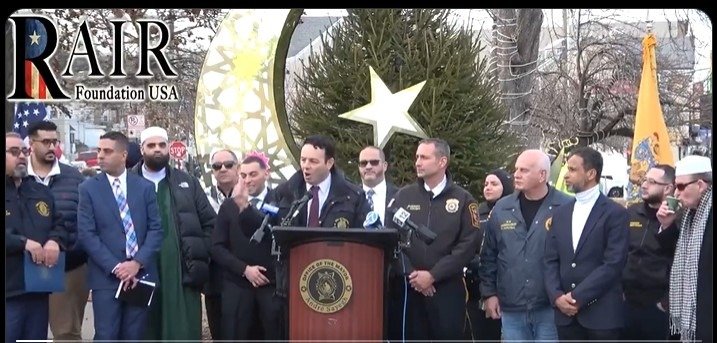
Paterson, New Jersey, a city known for its diverse population and industrial history, is at the center of heated debate following claims that Muslim politicians, with support from left-leaning allies, have taken control and are reshaping the city into an Islamic stronghold. Social media posts and reports circulating online allege that Palestinian flags have been raised over government buildings, with some attributing a provocative statement to Mayor Andre Sayegh: “Paterson is the fourth holiest city in the world: Jerusalem, Mecca, Medina, and then Paterson, New Jersey.”
These claims, primarily amplified through posts on X, suggest that Paterson’s city council, which reportedly includes Muslim members, is advancing policies aligned with Islamic values, such as broadcasting the Adhan (Islamic call to prayer) and introducing halal food options in schools. Critics argue this represents an erosion of constitutional values, with some labeling Paterson as “America’s first Islamic city.” They point to events like Muslim Heritage Month celebrations at City Hall, where Islamic symbols and rhetoric were prominently displayed, as evidence of an agenda to “Islamize” the city.
However, these assertions lack verified evidence from official sources. Mayor Sayegh, a Catholic, has not been documented making the “fourth holiest city” claim, and city officials have not confirmed plans to establish Paterson as an Islamic stronghold. Paterson’s diverse leadership reflects its population, which includes a significant Muslim community, but no ordinance or policy explicitly prioritizes Sharia law or Palestinian symbolism over U.S. governance. The Palestinian flag’s presence, if true, may relate to cultural events rather than official policy.
Supporters of Paterson’s leadership argue that these claims are exaggerated, rooted in anti-Muslim sentiment, and misrepresent efforts to celebrate the city’s multiculturalism. They highlight that policies like halal food accommodations are inclusive, not exclusive, and reflect the needs of a diverse population. Critics, meanwhile, demand transparency and vigilance, framing the issue as a broader cultural and political clash.
The controversy underscores tensions over identity and governance in diverse American cities. Without concrete evidence, the narrative remains speculative, fueled by polarized online discourse. Paterson’s future will depend on how its leaders navigate these claims while balancing inclusivity and unity.
References:
[1] https://t.co/zclF8O7wOt
[3] https://t.co/1YsNRWiajh[](https://x.com/WallStreetApes/status/1907928011489554797)
New Jersey’s First Islamic City…
— Amy Mek (@AmyMek) March 8, 2025
Paterson Declared ‘CAPITAL OF PALESTINE’ by Elected Officials – the "Mecca' of NJ ?
Muslim politicians and their left-wing enablers have seized control of Paterson, raised Palestinian flags on government buildings, and are openly boasting… pic.twitter.com/tlMBIz5dTU





+ There are no comments
Add yours