
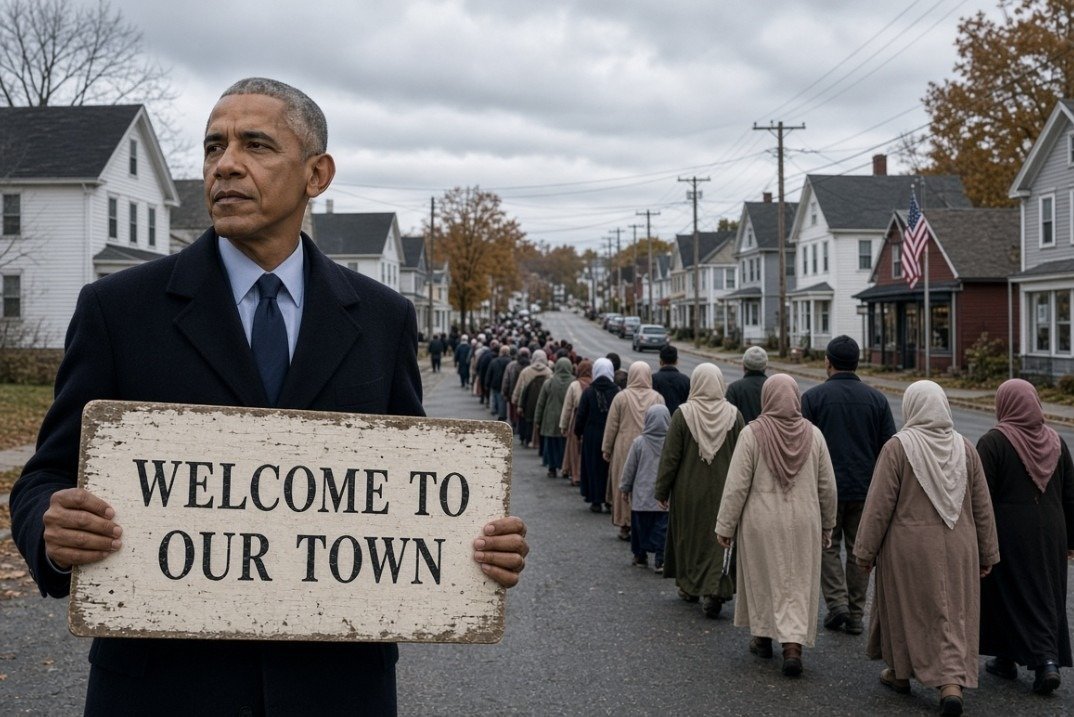
WASHINGTON — Lewiston, Maine, was a small, predominantly white mill town with a stable population for generations. Beginning in the early 2000s and accelerating under the Obama administration’s refugee ceilings, federal resettlement agencies directed successive waves of Somali and other Muslim refugees into the city and surrounding areas. State Department and ORR data show Maine receiving thousands of arrivals from Somalia and other Muslim-majority countries during the 2009–2016 period. The placements were not random. Resettlement contractors operate under federal contracts that identify receiving communities; low-density areas with available housing and existing social-service infrastructure were repeatedly selected.
Census figures record the result. Lewiston’s foreign-born and Black population rose sharply while the overall city population remained relatively flat. School enrollment shifted, public assistance rolls expanded, and local budgets absorbed the costs. Similar patterns appeared in other low-population receiving sites. The administration described the policy as humanitarian. Local officials later described concentrated settlement that altered the demographic balance of places that had never experienced large-scale foreign inflows. National media coverage of those shifts was limited while the policy was being implemented.
The same networks that later treated every border metric under subsequent presidents as a crisis gave far less attention to the deliberate direction of resettlement into sparsely populated communities between 2009 and 2016. Refugee processing and chain-migration rules continued afterward, but the baseline architecture that concentrated certain nationalities into towns like Lewiston was established earlier. Americans can examine the annual refugee admission reports, the Census tract data for Lewiston, and the contractor placement records. The numbers are public. The selective quiet that accompanied the concentration of those numbers is also public. One record shows intentional placement into low-density areas. The other record shows major outlets that preferred not to dwell on the long-term composition of those communities. The difference in coverage is measurable. The demographic change in Lewiston is not in dispute.
— Josiah Hale, WAA1776
References