






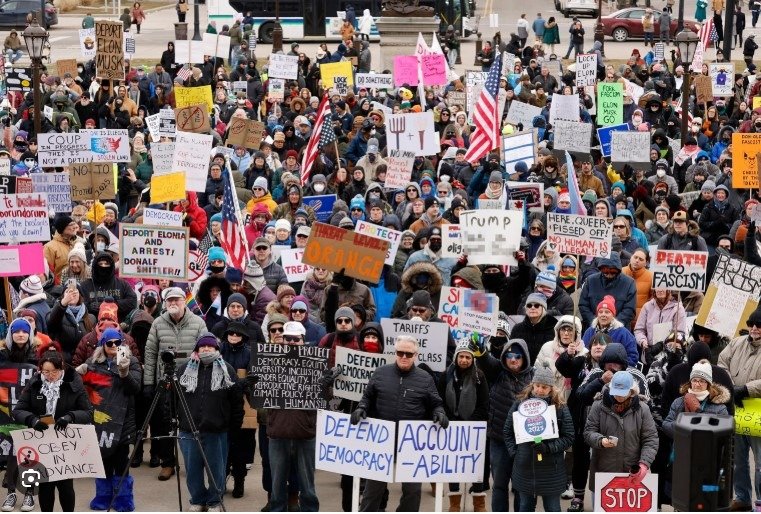
In recent years, political protests have become a familiar sight in Washington, D.C., with crowds gathering to voice opposition to various policies. However, questions have emerged about the authenticity of these demonstrations, particularly those aligned with Democratic causes. Allegations suggest that some protesters may not be grassroots activists but rather paid participants hired through platforms like Crowds on Demand, with funding potentially linked to organizations like ActBlue. Reports indicate that these gigs can pay upwards of $300 a day, attracting individuals out of work or on fixed incomes, including a noticeable number of white retirees at recent D.C. protests. Crowds on Demand, a U.S.-based firm, specializes in providing hired crowds for political rallies, advocacy campaigns, and public relations stunts. The company’s CEO, Adam Swart, has openly discussed how his organization recruits individuals to participate in protests, compensating them typically in the low hundreds of dollars per day. Swart claims his firm works with both liberal and conservative causes, emphasizing that participants are sincere advocates, though they are paid for their time. This practice, often labeled as “astroturfing,” raises concerns about the authenticity of political movements, as it suggests orchestrated efforts rather than organic public sentiment. ActBlue, a major fundraising platform for Democratic campaigns, has been accused by some critics of indirectly facilitating paid protests by channeling funds to activist groups. While no direct evidence ties ActBlue to hiring protesters, its role in funneling millions to progressive organizations has fueled speculation about how these funds are used. Some allege that these groups, in turn, contract services like Crowds on Demand to bolster their demonstrations. Additionally, platforms like Craigslist have been cited as avenues for recruiting paid protesters, with ads reportedly offering $300 daily for participation in political events. Such compensation is particularly appealing to unemployed individuals or retirees on fixed incomes, who may see protesting as a lucrative side gig.The demographic makeup of recent D.C. protests has added to the controversy. Observers have noted that many participants appear to be older, predominantly white retirees, a group that may be more likely to respond to paid opportunities due to financial constraints or availability. This contrasts with the diverse, younger crowds often associated with grassroots movements, suggesting a curated assembly rather than a spontaneous uprising. Critics argue that paid protests undermine the integrity of political discourse, creating the illusion of widespread support. However, defenders of the practice, including Swart, compare it to purchasing advertising, a common tactic in advocacy. Regardless, the existence of paid protesting highlights a growing trend in modern activism, where financial incentives may blur the line between genuine passion and manufactured outrage.
Links: