






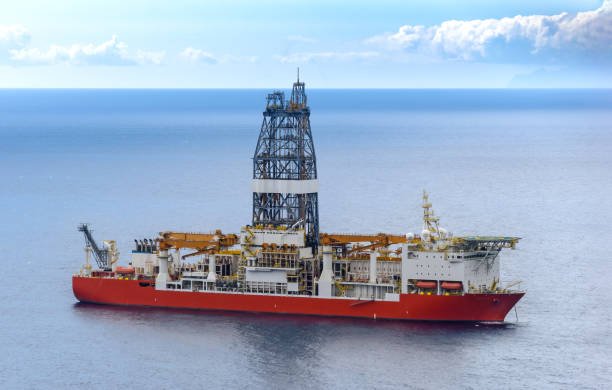
As 2025 draws to a close, the global energy landscape is poised for a seismic shift, with the offshore oil industry—particularly in the U.S. Gulf of Mexico—emerging as the undisputed engine of growth. After years of steady investments and technological triumphs, experts forecast a robust expansion in 2026, driven by new field developments, regulatory tailwinds, and unyielding demand for American crude. This isn’t just stabilization; it’s a full-throated boom that could redefine U.S. energy independence, bolstering domestic production to record highs and injecting billions into the economy.The Gulf of Mexico, often called the “engine room” of U.S. oil, is at the epicenter. Accounting for about 15% of total U.S. crude output, the region has weathered hurricanes, geopolitical storms, and market volatility to deliver consistent gains. According to the U.S. Energy Information Administration (EIA), Federal Offshore Gulf production is projected to average 1.81 million barrels per day (b/d) in 2026, up from 1.80 million b/d in 2025 and a slight dip to 1.77 million b/d in 2024. This modest but meaningful uptick—fueled by 13 new fields coming online in 2025-2026—offsets natural declines from mature assets, ensuring flat-to-rising volumes through the decade.What sets 2026 apart is the scale of sanctioned projects and the influx of capital. Industry leaders at the Offshore Technology Conference in May 2025 projected Gulf output could surge to 2.4 million b/d by 2027, with 2026 as the pivotal ramp-up year. Key drivers include mega-developments like BP’s $5 billion Tiber-Guadalupe project, greenlit in September 2025, targeting ultra-high-pressure reservoirs at 20,000 psi—a feat of engineering that unlocks vast untapped reserves. Shell’s Whale field, which hit first oil in January 2025, is already contributing, while Ballymore (April 2025) and Shenandoah (June 2025) will add 75,000 b/d and 120,000 b/d respectively, ramping to full capacity by mid-2026.Technological wizardry is the secret sauce. Subsea tiebacks like Silvertip Phase 3, Longclaw, and Monument—slated for 2025—slash costs and timelines, enabling operators to chase deepwater plays in the Norphlet and Jurassic formations. Chevron’s pioneering high-pressure tech, first deployed last year, paves the way for similar breakthroughs, making marginal fields economically viable even if oil dips below $60 per barrel.Policy winds are howling in favor, too. The incoming administration’s pro-drilling stance promises streamlined permitting and a June 2026 lease sale, clearing litigation overhangs from the Biological Opinion saga. Wood Mackenzie highlights this as a “bright regulatory future,” potentially unlocking $60 billion in capex and 7 billion barrels of oil equivalent in reserves by year’s end. Amid shale’s plateau, offshore’s long-cycle reliability shines, with majors like ExxonMobil and Occidental pivoting Gulfward for sustained growth.Economically, the ripple effects are profound. The Gulf boom could generate 50,000 jobs in Louisiana, Texas, and Mississippi alone, from rig workers to supply chain pros, while funneling $10-15 billion in royalties to federal coffers. Globally, it tempers volatility from Middle East tensions, positioning U.S. exports as a stabilizing force.Yet, challenges loom: an above-normal 2026 hurricane season could disrupt timelines, and environmental scrutiny persists. Still, with LNG demand soaring and EV transitions slower than hyped, the Gulf’s hydrocarbons remain indispensable.2026 isn’t just another year—it’s the dawn of offshore’s renaissance. As rigs hum and platforms rise, the Gulf of Mexico proves once more: America’s energy future is deep, blue, and bountiful.
References: