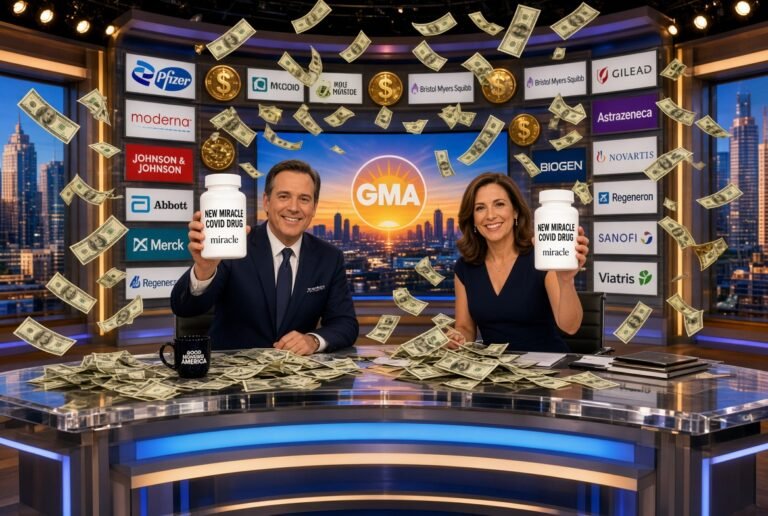





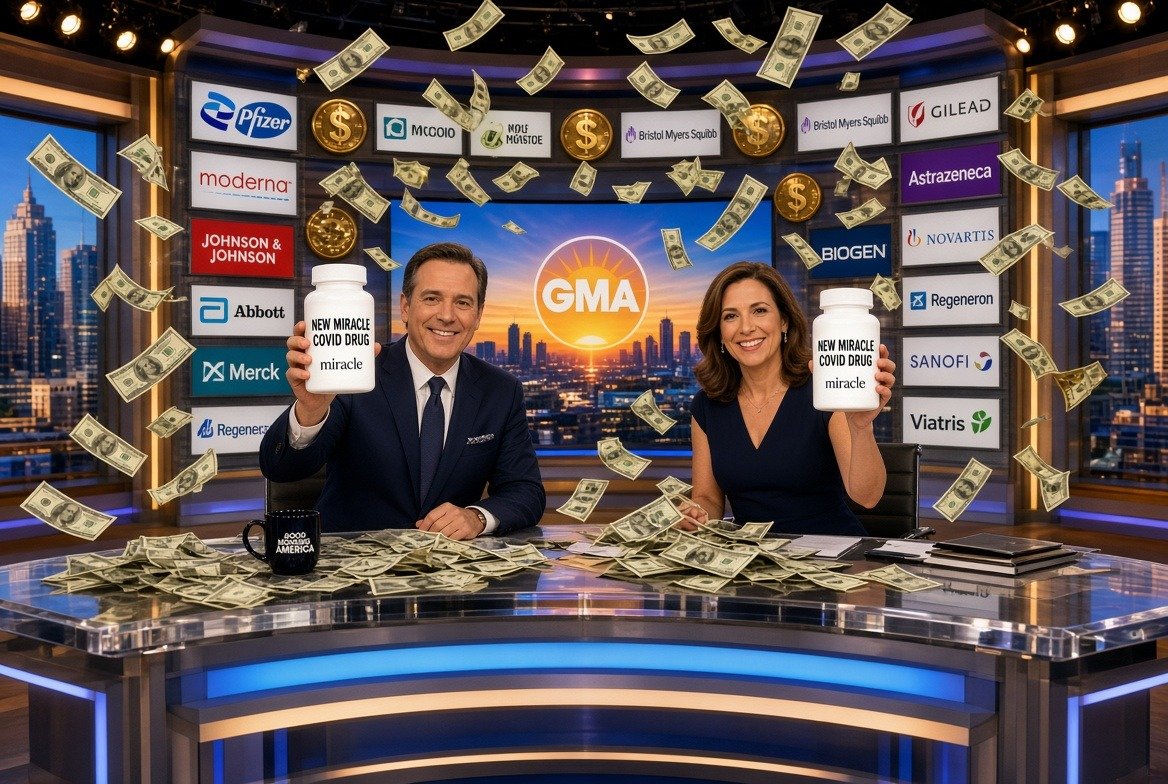
Morning television sells itself as a kitchen-table conversation. Good Morning America is no exception. It is also a high-priced advertising platform. Pharmaceutical companies have spent years buying that airtime, integrating messages, and sponsoring segments. That is not a conspiracy theory. It is how the business works.
When a show that lives on ad dollars suddenly lights up over a “new miracle” COVID pill, the first question is not whether the science is interesting. It is who is writing the checks. Pharma does not buy morning-show real estate for charity. It buys it to move product and to shape what millions of people hear before they pour the coffee.
America already lived through years of COVID coverage that treated every new therapy, shot, or mandate as settled science until it wasn’t. Viewers were told to trust the experts, then watched the experts revise the story. A network that took that ride still has the same advertisers. The same incentives. The same reluctance to say, on air, “this is a sponsored environment.”
A real drug can have real data. Post-exposure antivirals exist. Clinical trials can show risk reduction. That is not the same thing as a miracle, and it is not the same thing as independent journalism. Relative-risk numbers look impressive until someone mentions cost, side effects, who actually needs it, and how long the last “breakthrough” lasted.
The honest question is simple: Why does a morning show that never met a health scare it couldn’t package treat a new pill like breaking news instead of like another product launch? Because the same industry that profits from chronic illness also profits from the next round of fear and the next round of treatment.
Viewers are not required to be cynical. They are required to be adults. Ask who paid for the segment. Ask what the trial actually measured. Ask what happens when the next variant, the next summer wave, or the next campaign arrives. The bill always comes due. Someone is paying it. It is rarely the audience.