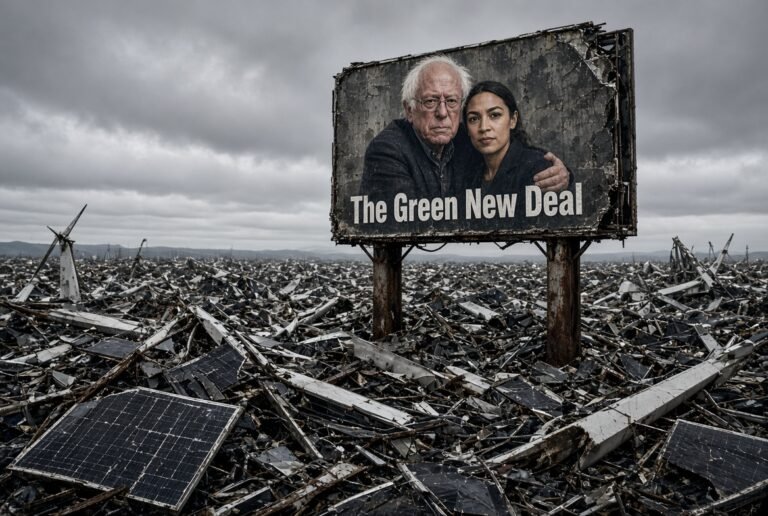







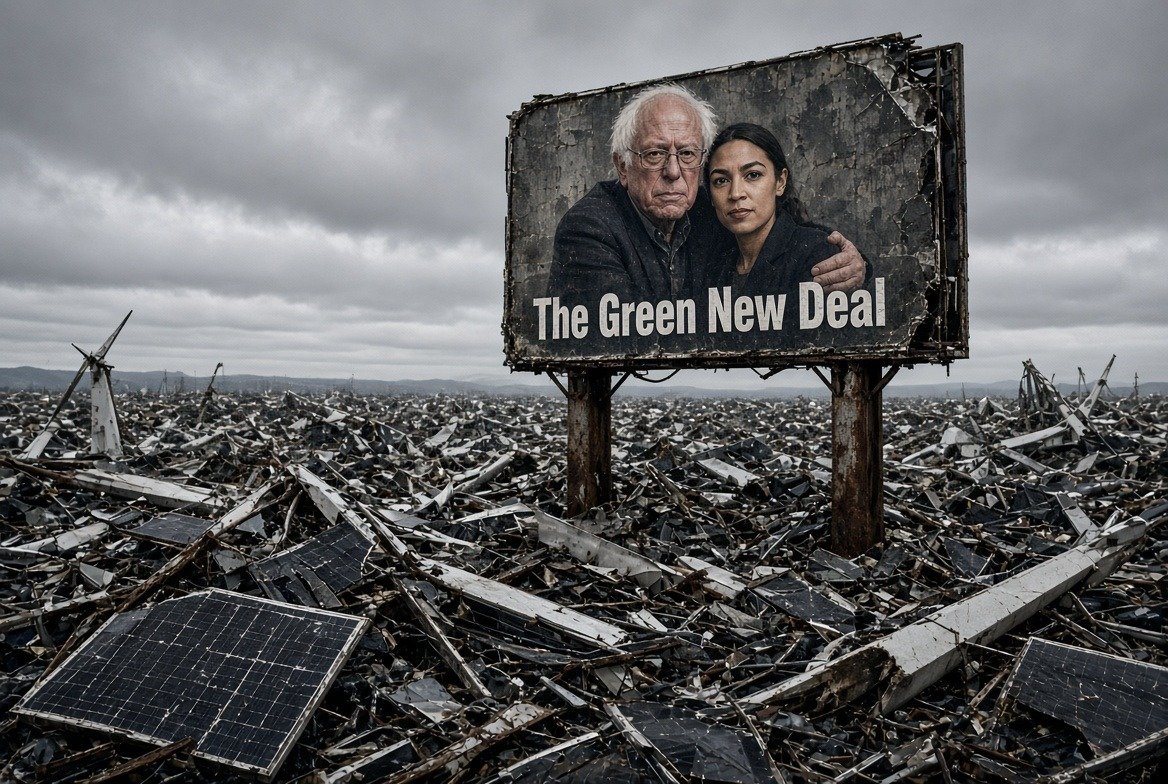
The so-called green energy transition is sold as moral progress. In practice it is becoming one of the most expensive waste-management problems ever created — and a reliable pipeline for moving American tax dollars into favored hands.
Wind turbines and solar panels do not last forever. Most turbines need replacement every 20–30 years. Their massive composite blades are made of fiberglass and resin that are extremely difficult and expensive to recycle. Landfilling is still the cheapest option in many places. Solar panels present a similar problem: aluminum frames can be recovered, but the glass, plastics, and embedded metals are costly to separate. Recycling often costs far more than the recovered materials are worth, so much of the volume ends up in landfills or is exported.
The scale is already large and growing. The United States alone has tens of thousands of turbines and hundreds of millions of panels. Global projections put cumulative blade waste in the hundreds of millions of tons by mid-century, with solar panel waste adding tens of millions more. Foundations of concrete and rebar stay in the ground. Batteries that back up intermittent power add another toxic disposal challenge. Mining the rare earths and metals for these systems frequently occurs overseas under weaker environmental rules, creating pollution far from the eyes of American voters who pay the subsidies.
This is where the cash cow appears. Federal tax credits, production subsidies, and loan guarantees have poured billions into wind and solar developers. When the equipment reaches the end of its short working life, the same political networks that championed the build-out are rarely held responsible for the cleanup bill. Ratepayers and taxpayers absorb the costs. Companies and politically connected investors keep the profits. The pattern looks less like environmental stewardship and more like a classic wealth-transfer scheme: public money in, private gains out, long-term liabilities left for the public to manage.
Critics have long warned that “green” policy functions as industrial policy for preferred constituencies. The waste crisis makes the point concrete. If the technology were truly sustainable, the full lifecycle — mining, manufacturing, short operational life, and disposal — would be priced in from the start. Instead, the environmental costs are deferred and the financial rewards are front-loaded. That is the definition of a slush-fund opportunity.
Americans should demand transparent accounting: who pays for decommissioning, where the waste goes, and how much of the subsidy stream ends up with donors, NGOs, and corporate partners rather than actual energy reliability. Without that scrutiny, the green transition risks becoming another vehicle for moving taxpayer money upward while leaving mountains of unrecyclable trash behind.
The energy system needs reliability and affordability. Turning intermittent power into a permanent subsidy machine does neither.
References