WASHINGTON — Residential and commercial electricity rates in most of the United States are set by state public utility commissions. These multi-member boards, appointed by governors in forty states and elected in the remaining ten, review rate cases filed by investor-owned utilities and approve the charges customers pay. The traditional cost-of-service model allows the utility to recover operating expenses plus a regulated return on equity for capital investments. In practice the commission decides which costs are recoverable and what return is reasonable. Customers in monopoly service territories have no competitive alternative. The same structure applies to most rural electric cooperatives, which serve large portions of the country under state or federal oversight and operate without the same shareholder pressure as investor-owned firms.
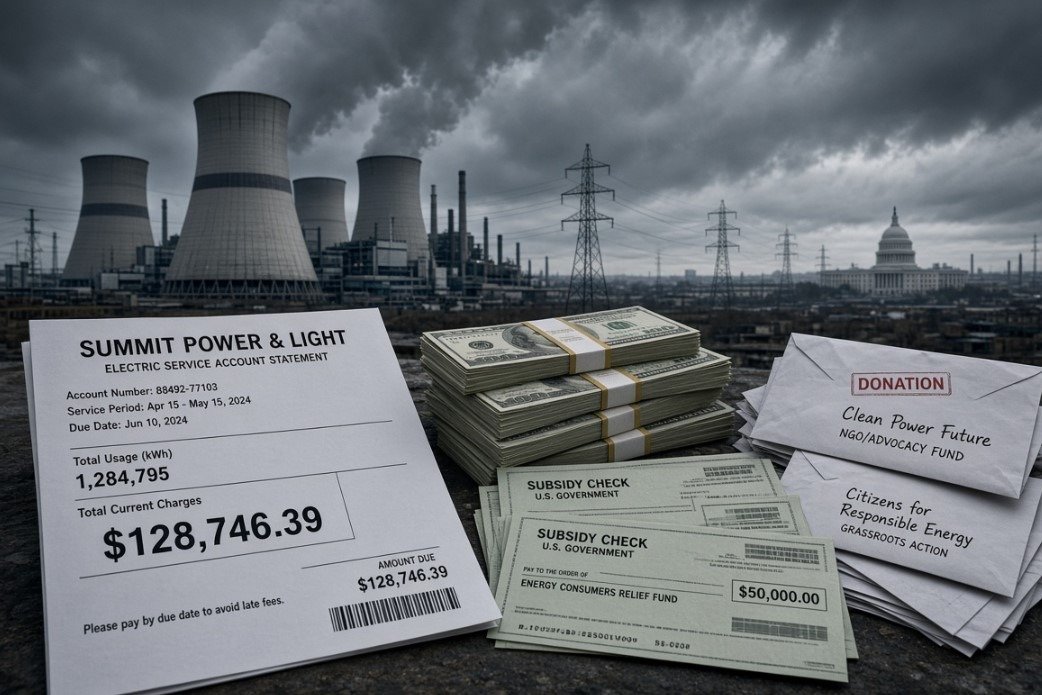
The entities that appear before those commissions also appear in campaign finance reports. The National Rural Electric Cooperative Association’s America’s Electric Cooperatives PAC has ranked among the largest donors in the electric sector in recent cycles, directing millions to federal candidates of both parties. Investor-owned utilities and their trade associations have contributed tens of millions more through PACs and to 527 organizations such as the Republican and Democratic Governors Associations. OpenSecrets and Energy and Policy Institute data show the sector’s federal PAC spending routinely exceeds ten million dollars per cycle, with additional state-level giving and lobbying expenditures that have climbed toward one hundred fifty million dollars annually. Recipients include members of energy and appropriations committees in both chambers. The contributions are legal. They are also concentrated among the firms whose rate requests the commissions later review.
The regulatory monopoly creates a closed loop. A utility or cooperative files for a rate increase. The commission, whose members are either elected or appointed by officials who receive industry support, evaluates the request. Approved costs and returns are recovered from captive ratepayers. Political spending by the same firms is drawn from corporate or member resources and directed toward the legislators and governors who appoint or oversee the regulators. Rural cooperatives emphasize that their PAC contributions come from voluntary individual donations rather than rate revenue; investor-owned utilities face fewer such restrictions. In either case the public record shows sustained financial relationships between the regulated entities and the elected officials who shape the regulatory environment. The bill the customer receives is the product of that process. The political contributions are a documented part of the same process.
— Josiah Hale, WAA1776
References
- https://psc.wi.gov/Pages/CommissionActions/RateCaseApproval.aspx
- https://www.spglobal.com/market-intelligence/en/news-insights/articles/2024/11/electric-co-ops-top-industry-s-political-donations-utilities-change-approach-85961489
- https://energyandpolicy.org/utility-federal-political-contributions-2026/