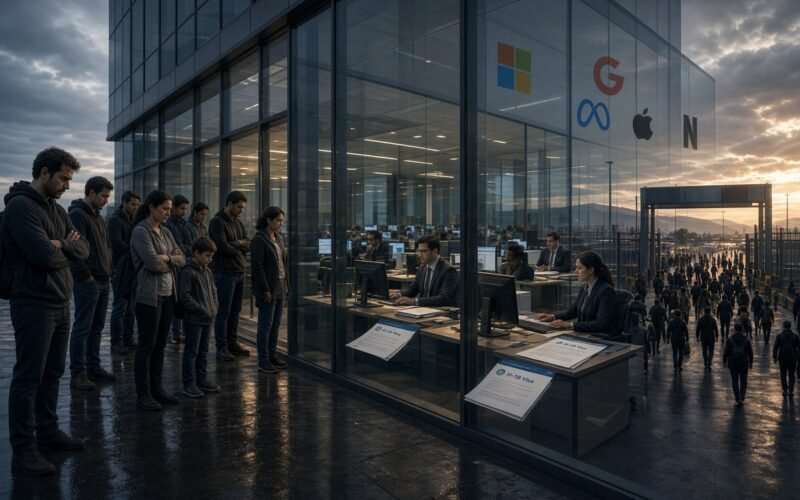
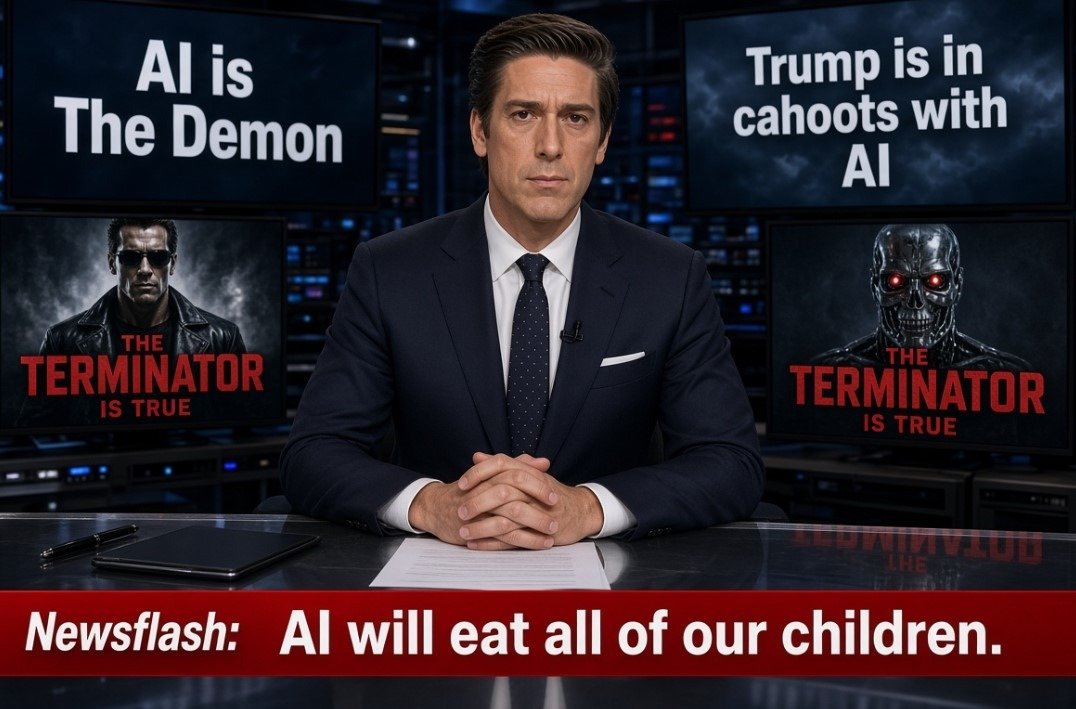
Washington — The propaganda mouthpieces of the American media are doubling down on their campaign to demonize artificial intelligence, seizing on a fresh wave of university cyberattacks to paint AI as the new existential boogeyman. On November 10, 2026, The Daily Pennsylvanian ran a piece titled “After string of cyberattacks, experts say Penn’s security needs rethinking,” in which computer science professors blamed the rising threat level squarely on frontier AI models.
The article notes that Penn’s firewall blocked 5.8 billion attacks a month in fiscal year 2025, up from 4.1 billion the prior year. Experts quoted in the story claim we are “on the cusp of a whole new era of attacks on computational infrastructure” because “frontier AI models have become terrifyingly good at discovering vulnerabilities, even in extremely well-tested and thoroughly vetted software.” One professor pointed to Microsoft’s monthly patches exploding from 79 in March to more than 1,400 in October as evidence that AI has lowered the barrier so far that state-level attacks are now within reach of a smart high-school kid.
The same day, Vanderbilt University confirmed an active cybersecurity incident that forced it to order students and staff to shut down university devices and disconnect from campus Wi-Fi. A ransomware group calling itself BYOD claimed responsibility and asserted it had stolen more than a million Social Security numbers along with student and employee records. Vanderbilt has not confirmed the group’s claims or the scale of any data theft, yet the timing has allowed media outlets to fold the incident into the broader “AI is the threat” narrative.
This is the same pattern we have watched for months. When traditional weaknesses—open networks, human error, outdated software, and poor incentives for vendors to ship secure code—explain most of the damage, the propaganda mouthpieces still rush to pin the problem on artificial intelligence. They rarely emphasize that universities have always been soft targets because they are designed as open environments, or that human social engineering remains the most reliable entry point. Instead, the story is framed as proof that AI itself is the villain.
The effect is predictable. Fear of AI becomes the justification for more regulation, more centralized control, and more power handed to the same bureaucratic and corporate entities that have failed at basic security for years. Americans who have used AI tools to research, write, and expose corruption are supposed to accept that the technology is inherently dangerous while the institutions that mishandle data and leave doors open escape scrutiny.
The real story is not that AI invented cybercrime. It is that media outlets continue to treat every new capability as a crisis that only more government and more institutional power can solve. Until they start asking why universities still run on vulnerable systems and why vendors face no real liability for shipping insecure code, the demonization of AI will keep serving as a convenient distraction.
References
- https://www.thedp.com/article/2026/11/penn-it-artificial-intelligence-cybersecurity-attacks
- https://www.axios.com/2026/11/09/vanderbilt-university-attack-phone-devices-computer
- https://brandefense.io/security-news/vanderbilt-cyberattack-confirmed-claimed/
Josiah Hale, WAA1776