WASHINGTON — Child welfare is a state industry measured in billions. Title IV-E reimburses states for a share of the costs of eligible children once they are in foster care—maintenance, administration, training. For years the federal match has favored out-of-home placement over the smaller, capped streams available for keeping families together. A child removed and kept out of the original home generates an ongoing claim. A family left intact generates less. The arithmetic does not require a secret order. It requires only that the placement continue.
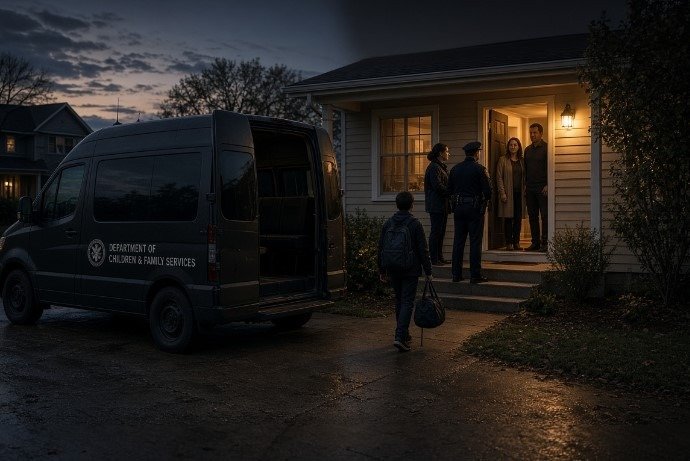
The operational power is broader still. When a caseworker asserts immediate danger, a child can be taken without a prior court order. Police accompany. The parent is told the child is leaving. A hearing follows later. In that first window the parent has no practical ability to stop the removal. Counsel is not yet appointed. The constitutional right to due process is real on paper and delayed in the driveway. Lawsuits in multiple jurisdictions have challenged patterns of emergency removals that later failed judicial review, but the first step—the van, the child in the seat—has already occurred. For the family with limited resources, the process is the outcome.
Arkansas supplies a recent illustration of the opposite failure and the same opacity. In Mountain Home a teenage boy was the subject of 29 reports to the child-abuse hotline between 2013 and 2024. Teachers, school resource officers, and health workers called. Every report was closed as unsubstantiated. In November 2024 police found him locked naked in a bathroom, a ratchet strap securing the door from the outside. He slept on a pallet and was allowed to eat only on school days. The adults responsible later received long prison sentences. A federal audit of Arkansas investigations later found the state failed to follow its own rules in 138 of 140 sampled cases. DHS initially promised an internal review of the Mountain Home handling, then declined to release it, citing confidentiality. The pattern of ignored reports was public only after the police discovery. The full administrative record was not.
The industry is not hidden. The reimbursement rules are public. The emergency-removal statutes are public. The volume of entries into foster care is public. What remains difficult to examine is the gap between the moment a parent is told the child is leaving and the later hearing that may or may not reverse it, and the gap between repeated reports and an agency that closes them until a different agency opens a door. The funding stream continues either way. The child who generates the claim does not see the invoice. The parent who loses the child in the driveway does not get a vote on the next claim.
— Josiah Hale, WAA1776
References
- https://nccpr.org/nccpr-issue-paper-12-financial-incentives-you-get-what-you-pay-for/
- http://mhobserver.com/federal-audit-cites-mountain-home-case-finds-arkansas-failed-to-follow-rules-in-138-of-140-child-abuse-investigations/
- https://www.law.nyu.edu/news/family-defense-clinic-files-landmark-class-action-over-unlawful-child-removals